For Call Support:
977-1-4529994

Trek Grade

Moderate

Max Trekking Altitude

4,100 m (13,451 ft)

Group Size

2 to 12 people

Best time to go

March to May (Spring) September to November (Autumn)

Highlights

    A Hidden Gem in Central Nepal
    The Ganesh Himal Trek offers a pristine, off-the-beaten-path experience through the heart of central Nepal — far from the crowded trails of Everest and Annapurna, yet rich in natural beauty and cultural diversity.
    Breathtaking Views of the Ganesh Himal Range
    Enjoy uninterrupted views of the majestic Ganesh Himal peaks, including Ganesh I (7,422m), Ganesh II, III, and IV. These snow-covered giants stand tall alongside Manaslu, Langtang, and the distant Annapurna range.
    Authentic Tamang & Gurung Villages
    Immerse yourself in the traditional lifestyle of Tamang, Gurung, and Ghale communities. Visit remote mountain villages where age-old customs, vibrant festivals, and Buddhist traditions are still deeply preserved.
    Rich Biodiversity and Scenic Forest Trails
    Trek through dense forests of oak, pine, and rhododendron — home to wildlife such as red pandas, Himalayan thar, langurs, and exotic bird species. Spring transforms the trail into a colorful wonderland of wildflowers.
    Spectacular Ridge Walks and Mountain Passes
    Follow scenic ridgelines and cross remote high passes like Pangsang La (3,850m), offering jaw-dropping 360° views of the surrounding Himalayan range and lush river valleys below.
    Untouched Natural Beauty
    The Ganesh Himal region is still relatively undiscovered, making it ideal for trekkers seeking solitude, raw nature, and an authentic Himalayan trekking experience without the commercialization of popular trails.
    Sacred Lakes and Spiritual Sites
    Explore hidden spiritual sites, sacred caves, monasteries, and tranquil high-altitude lakes revered by locals — making the trek both a physical and spiritual journey.
    Panoramic Viewpoints and Sunrise Moments
    Catch breathtaking sunrises over snow-dusted peaks from high points like Pangsang La, Singla Pass, or Kalawati Danda. These viewpoints rival even the most iconic Himalayan panoramas.
    Cultural Encounters with Less-Touched Communities
    Travel through unspoiled ethnic villages where you may be among the few outsiders to ever visit — creating meaningful interactions and helping support sustainable tourism in remote areas.
    Customizable and Flexible Routes
    The Ganesh Himal region offers various trekking routes ranging from moderate to challenging — including options to combine with Manaslu, Langtang, or the Ruby Valley Trek, depending on your interests and time.

Ganesh Himal Trek

Ganesh Himal Trek with Mountain Legend
For those seeking a unique and off-the-beaten-path adventure in Nepal, the Ganesh Himal Trek is a journey that promises to immerse you in the untouched beauty of the Himalayas. With Mountain Legend as your guide, this trek takes you through hidden valleys, charming villages, and majestic peaks, offering a rare opportunity to experience Nepal’s natural and cultural wonders without the crowds of more popular trekking routes.
The Ganesh Himal range, named after the Hindu god Lord Ganesh, lies to the north of Kathmandu and offers a trek that is as much about discovering the serenity of the mountains as it is about exploring the rich traditions of rural Nepalese life. The trail is remote, making it ideal for trekkers who crave a true sense of adventure.
Ganesh Himal: The Hidden Majesty
The Ganesh Himal range, with peaks reaching up to 7,422 meters (24,349 feet), remains relatively unexplored compared to some of Nepal’s more famous trekking routes, offering an untouched wilderness for those willing to venture into its folds. Named after Lord Ganesh, the elephant-headed god of wisdom and good fortune, the range features several stunning peaks, including Ganesh I, Ganesh II, and Ganesh III, as well as the sacred Langtang Lirung in the distance.
The trek offers spectacular views of these towering peaks, with snow-covered summits reflecting the light of the sun, creating a magical atmosphere that feels both humbling and awe-inspiring. For trekkers looking to connect with nature, the Ganesh Himal trek delivers some of the most pristine, unspoiled landscapes you’ll find anywhere in Nepal.
The Trek: Journey Through the Heart of Nepal
The Ganesh Himal Trek is a true adventure for those who want to experience Nepal’s remote rural landscapes. Your journey begins in Trisuli, a town that is easily accessible from Kathmandu, but as you ascend, the noise of the city quickly fades, replaced by the tranquility of the mountains and the rhythm of local life.
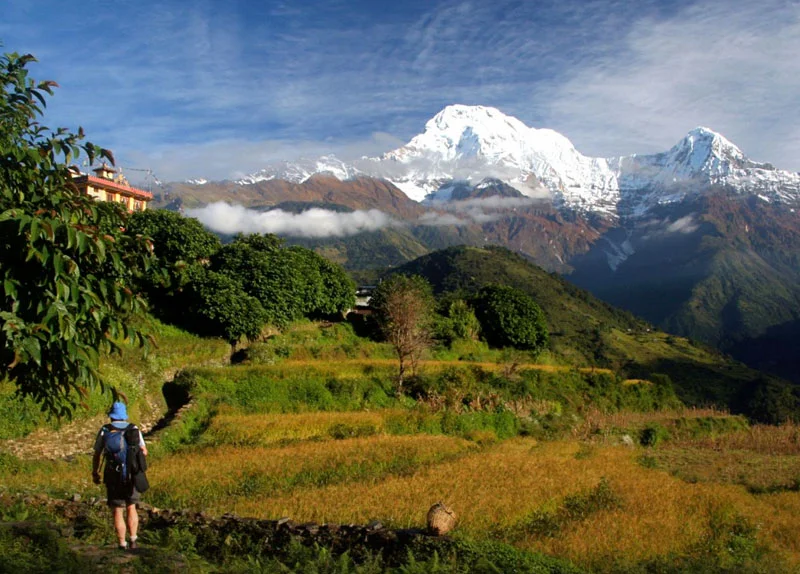
The trek leads you through small villages, terraced fields, dense forests of rhododendron, oak, and pine, and high-altitude meadows. As you climb higher, the views become even more breathtaking, with a dramatic panorama of Ganesh Himal, Manaslu, and other surrounding peaks. Along the way, you’ll have the opportunity to visit traditional villages such as Bhalche, Pangsang, and Chhekampar, where the Tamang people reside.
The Tamang people, a Tibeto-Burman ethnic group, are known for their Buddhist traditions and hospitality. The culture of the region is influenced by Tibetan Buddhism, and you’ll encounter monasteries, chortens, and prayer flags that line the paths. The warm hospitality of the locals will make your stay in these villages memorable, as you experience the simple, peaceful way of life in this remote region.
Pangsang Pass: A Hidden Treasure
One of the most rewarding parts of the Ganesh Himal Trek is the climb to Pangsang Pass (3,800 meters), which offers some of the most dramatic and panoramic views of the entire trek. From the pass, trekkers can take in a 360-degree view of the surrounding peaks, including Ganesh I, Ganesh II, Manaslu, and the Langtang range. It’s a sight that few trekkers ever have the privilege of experiencing—a vast, unspoiled wilderness stretching into the horizon.
The pass is not just a highlight of the trek for its views but also a place of spiritual significance, with prayer flags fluttering in the wind and offering a sense of connection to the sacredness of the land.
The Natural Beauty and Wildlife of Ganesh Himal
The Ganesh Himal region is home to a diverse range of flora and fauna, making it a paradise for nature lovers. As you trek through dense forests and alpine meadows, you may encounter wildlife such as Himalayan tahr, monkeys, wild boar, and even the elusive snow leopard in the higher reaches. The forests are alive with bird song, and trekkers often spot Danphe (Himalayan monal), the national bird of Nepal, as it flutters through the trees.
In addition to the wildlife, the variety of plants found along the trail is astounding, with rhododendron blooms painting the forests in vivid colors during the spring season. The trek offers the chance to witness the full cycle of nature as you pass from lush green forests at lower altitudes to the stark beauty of alpine meadows and rugged mountain landscapes.
Best Time to Trek Ganesh Himal
For the best trekking experience, Mountain Legend recommends visiting during the spring (March to May) or autumn (September to November) months. These seasons offer clear skies, moderate temperatures, and vibrant landscapes, making it an ideal time for trekking in the high Himalayas. The spring months bring the colors of blooming rhododendrons, while autumn offers crisp air and exceptional visibility of the mountains. The winter months can be harsh, especially at higher altitudes, and the summer monsoon season may bring occasional rain, making the trails slippery and difficult.
Permits and Regulations
To trek in the Ganesh Himal region, trekkers must obtain the following permits:
Ganesh Himal Conservation Area Permit: This permit is required for entering the Ganesh Himal Conservation Area, which is dedicated to preserving the region’s unique wildlife and ecosystems.
TIMS (Trekkers’ Information Management System) Card: This card is mandatory for all trekkers in Nepal to ensure safety and security.
At Mountain Legend, we handle all the necessary permits, so you can focus on enjoying the trek and the incredible landscapes surrounding you.
Accommodation and Comfort
Throughout the Ganesh Himal Trek, trekkers stay in local teahouses run by the friendly Tamang people. These simple guesthouses offer basic yet comfortable accommodations, with shared rooms and common areas where you can relax after a day of trekking. The teahouses offer traditional meals, such as dal bhat, momo, and thukpa (noodle soup), which provide the energy you need to continue your journey.
As you ascend higher, the accommodations become more basic, but the hospitality and warmth of the locals ensure you feel right at home. There’s no better way to experience the true spirit of the region than by staying in these small, family-run teahouses.
Why Choose Mountain Legend for Your Ganesh Himal Trek?
At Mountain Legend, we believe that trekking is not just about reaching a destination but about experiencing the journey. Our expert guides, with their in-depth knowledge of the region, will ensure that your trek through Ganesh Himal is safe, comfortable, and unforgettable. We take pride in offering personalized experiences that immerse you in both the natural beauty and the rich cultural heritage of the region.
With Mountain Legend, you’ll have the chance to explore the pristine landscapes, meet the welcoming locals, and stand in awe of some of the most breathtaking views in Nepal. The Ganesh Himal Trek is the perfect adventure for those looking to discover a less-traveled part of Nepal while experiencing the beauty, serenity, and spiritual richness of the Himalayas.
Join us for a journey through one of Nepal’s hidden gems—where adventure, culture, and nature converge. Let Mountain Legend guide you to the heights of the Ganesh Himal Trek, and create memories that will last a lifetime.


Itinerary

  • Day 1 Arrival in Kathmandu

    Arrive in Kathmandu, Nepal’s capital city, and enjoy a transfer to your hotel. The rest of the day is at leisure, allowing you to rest or explore the vibrant streets of Kathmandu.
    Overnight: Hotel in Kathmandu
    Meals: None

  • Day 2 Drive from Kathmandu to Arughat Bazar

    After breakfast, drive from Kathmandu to Arughat Bazar (approximately 6-7 hours). The scenic drive passes through picturesque valleys, terraced fields, and small villages along the way. Upon arrival, you’ll stay in a tea house and relax for the night.
    Overnight: Tea House in Arughat Bazar
    Meals: Breakfast, Lunch, and Dinner

  • Day 3 Trek to Soti Khola

    On Day 3, you’ll begin your trek from Arughat to Soti Khola (700m). The trek will take about 5-6 hours, and you will pass through terraced fields, forests, and a variety of small villages. After a scenic day, you’ll stay overnight in a tea house in Soti Khola.
    Overnight: Tea House in Soti Khola
    Meals: Breakfast, Lunch, and Dinner

  • Day 4 Trek to Machhakhola

    Today, the trek continues to Machhakhola (930m), which will take around 6-7 hours. You’ll walk through dense forests, cross rivers via suspension bridges, and enjoy spectacular views of the surrounding hills. Upon arrival in Machhakhola, you’ll stay overnight in a tea house.
    Overnight: Tea House in Machhakhola
    Meals: Breakfast, Lunch, and Dinner

  • Day 5 Trek to Jagat

    On Day 5, you’ll trek to Jagat (1340m). This trek will take around 6-7 hours and involves walking through lush forests and riverside paths. Jagat is a small village offering views of the surrounding landscapes. You’ll rest for the night in a tea house in Jagat.
    Overnight: Tea House in Jagat
    Meals: Breakfast, Lunch, and Dinner

  • Day 6 Trek to Deng

    Today’s trek will take you to Deng (1860m). The trek will be around 5-6 hours, passing through terraced fields and rhododendron forests. The village of Deng provides a peaceful atmosphere and is a good place to rest.
    Overnight: Tea House in Deng
    Meals: Breakfast, Lunch, and Dinner

  • Day 7 Trek to Namrung

    On Day 7, you’ll trek to Namrung (2660m), a picturesque village in the region. The trek will take approximately 6-7 hours, and you’ll pass through scenic landscapes with views of the Ganesh Himal peaks. Namrung is a great place to relax and acclimatize.
    Overnight: Tea House in Namrung
    Meals: Breakfast, Lunch, and Dinner

  • Day 8 Trek to Shyalla

    Day 8 brings you to Shyalla (3520m), a village that offers magnificent views of the surrounding mountains. The trek will take 6-7 hours, passing through Tibetan-influenced villages and enjoying the stunning landscapes of the Ganesh Himal range.
    Overnight: Tea House in Shyalla
    Meals: Breakfast, Lunch, and Dinner


  • Day 9 Trek to Samagaon

    On this day, you’ll trek to Samagaon (3530m), a village known for its Tibetan culture. The trek takes about 6-7 hours, and you’ll be greeted with panoramic views of the surrounding peaks. Samagaon is a great place for acclimatization.
    Overnight: Tea House in Samagaon
    Meals: Breakfast, Lunch, and Dinner

  • Day 10 Rest Day - Optional Day Trip to Manaslu Base Camp

    Take a well-deserved rest day in Samagaon for acclimatization. You have the option to take a day trip to Manaslu Base Camp or visit the nearby Punggen Gompa. The day trip will take around 6-7 hours.
    Overnight: Tea House in Samagaon
    Meals: Breakfast, Lunch, and Dinner

  • Day 11 Trek to Samdo

    On Day 11, you will trek to Samdo (3800m), located near the Tibet border. The trek will take about 3-4 hours and offers beautiful views of the surrounding mountains. Upon arrival, you’ll rest in a tea house in Samdo.
    Overnight: Tea House in Samdo
    Meals: Breakfast, Lunch, and Dinner

  • Day 12 Rest Day - Optional Exploration to Tibet Border

    On Day 12, enjoy a rest day in Samdo to further acclimatize. You can opt for an exploration day trip to the Tibet Border, a short distance away, offering unique views of the Tibetan plateau.
    Overnight: Tea House in Samdo
    Meals: Breakfast, Lunch, and Dinner

  • Day 13 Trek to Dharmashala

    Today, you’ll trek to Dharmashala (4460m), a small settlement located before crossing Larke Pass. The trek will take around 3-4 hours, and you’ll be treated to stunning views of the surrounding mountains.
    Overnight: Tea House in Dharmashala
    Meals: Breakfast, Lunch, and Dinner

  • Day 14 Trek to Bhimthang via Larke Pass

    Day 14 is the most challenging day of the trek. You’ll cross the high Larke Pass (5106m), which is the highest point of the trek, before descending to Bhimthang (3720m). The trek will take around 8-9 hours and offers breathtaking views of the snow-capped peaks.
    Overnight: Tea House in Bhimthang
    Meals: Breakfast, Lunch, and Dinner

  • Day 15 Trek to Gowp

    On Day 15, you’ll trek to Gowp (2560m), a small village located in the valley below. The trek will take approximately 6 hours, and you’ll pass through forests and rivers.
    Overnight: Tea House in Gowp
    Meals: Breakfast, Lunch, and Dinner

  • Day 16 Trek to Tal

    Today, you’ll trek to Tal (1700m), which is located in a lush valley surrounded by beautiful landscapes. The trek will take around 6-7 hours, and you’ll experience a mix of terrain as you descend to lower altitudes.
    Overnight: Tea House in Tal
    Meals: Breakfast, Lunch, and Dinner

  • Day 17 Drive to Beshisahar and Then to Kathmandu

    On the final day, you’ll drive from Tal to Beshisahar, and then continue on to Kathmandu. The drive will take around 8-9 hours, offering great views as you return to the capital city.
    Overnight: Hotel in Kathmandu
    Meals: Breakfast, Lunch, and Dinner

Cost Include and Exclude

Include
    • Airport pick-up and drop-off as per the itinerary
    • Flights
    • One porter for every two clients
    • An experienced trekking guide and a porter
    • Meals and accommodation
    • Entry fees
    • Hotel accommodation
    • Ground transportation
    • Twin-sharing teahouse accommodations
    • Duffle bag
    • Farewell dinner
Exclude
    • Nepal visa
    • Alcoholic beverages, bottled mineral water, soft drinks, and snacks
    • Personal medical or evacuation expenses
    • Extra porter for personal day backpacks
    • Riding horses or additional activities
    • Extra costs due to natural disasters
    • Kathmandu/Pokhara sightseeing
    • Extra nights in Kathmandu
    • Clothing, packing items, personal medical kit, and personal trekking gear
    • Meals in Kathmandu and Pokhara
    • Tips or gifts for staff


Frequently Asked Questions

  • What is the Ganesh Himal Trek?

    The Ganesh Himal Trek is a remote and less-traveled trekking route in central Nepal, offering spectacular views of the Ganesh Himal range, authentic cultural experiences, and untouched natural beauty. It’s ideal for trekkers seeking solitude and off-the-beaten-path adventure.

  • Where is Ganesh Himal located?

    Ganesh Himal lies between Langtang National Park and the Manaslu Conservation Area, northwest of Kathmandu. The range is named after the Hindu deity Ganesh, and its peaks resemble an elephant’s head and trunk.

  • How long is the Ganesh Himal Trek?

    The trek usually takes 10 to 18 days, depending on the specific route, side trips, and start/end points. There are multiple trails through Dhading, Gorkha, Nuwakot, and Rasuwa districts.

  • What permits are required for the Ganesh Himal Trek?

    Permits depend on the specific route. In general, you may need:

    • TIMS Card(Trekkers’ Information Management System)
    • Langtang National Park Entry Permitor Manaslu Conservation Area Permit (MCAP) if passing through those zones

    A registered trekking agency can help secure the right permits.

  • What is the best time for the Ganesh Himal Trek?

    The best seasons are spring (March to May) and autumn (September to November), when the weather is stable and the skies are clear for mountain views.

  • Is the Ganesh Himal Trek difficult?

    The trek is considered moderate to challenging, involving remote trails, steep climbs, and high mountain passes. It requires good physical fitness and some prior trekking experience is beneficial.

  • What is the highest altitude on the trek?

    Depending on the route, the trek can reach altitudes over 4,000 meters, particularly when crossing passes like Pangsang La (3,850m).

  • What are the main attractions of the Ganesh Himal Trek?

    Highlights include:

    • Stunning views of Ganesh I (7,422m), Ganesh II, III, and IV
    • Remote Tamang and Gurung villages
    • Dense forests of rhododendron, pine, and oak
    • Hidden valleys and terraced farmlands
    • Sacred sites like Ganesh Kundaand Hot Springs

  • Is this a tea house trek or camping trek?

    The Ganesh Himal Trek is primarily a camping trek, especially in remote sections. Some newer routes offer basic homestays or teahouses, but infrastructure is limited.

  • Do I need a guide and porter for the trek?

    Yes, hiring a licensed guide and porter is highly recommended due to the remoteness of the region, lack of signage, and limited facilities. Some routes require you to trek through restricted or little-known areas where local knowledge is essential.

  • Is the Ganesh Himal Trek crowded?

    No. One of the biggest draws of the trek is its peaceful and uncrowded trails, making it perfect for those seeking solitude and authentic Himalayan wilderness.

  • Can the Ganesh Himal Trek be customized?

    Absolutely. There are multiple route options, and itineraries can be tailored to include cultural stops, scenic detours, or even connections to Langtang or Manaslu regions.

  • Are there risks of altitude sickness?

    Yes, especially if you’re trekking above 3,000 meters. Proper acclimatization, hydration, and gradual ascent are essential.

  • What should I pack for the Ganesh Himal Trek?

    Since much of the trek is remote, pack thoroughly:

    • Warm clothing (including a down jacket)
    • Waterproof layers
    • Good trekking boots
    • Sleeping bag (4-season)
    • Headlamp, toiletries, and first aid
    • Power bank and water purification tablets

  • Why choose the Ganesh Himal Trek over other popular treks?

    Choose this trek if you’re looking for:

    • Less commercialized trails
    • Rich Tamang and Gurung culture
    • Wild, scenic beauty with few tourists
    • A more adventurous and immersive trekking experience


Testimonials

Similar Tours You May Like

We are affiliated with